Показаны сообщения с ярлыком CDP. Показать все сообщения

суббота, 7 марта 2026 г.

Let's Debate CDP Functions, Not Definitions


What’s the definition of a CDP? It's a bad question because it diverts attention from what really matters: What capabilities do CDP users need? Still, buyers keep asking and sellers keep answering, typically in ways that promote their own interests. Looking for an unbiased perspective on the topic, I recently asked ChatGPT what answers it was finding. It came back with a reasonable cluster of responses and particularly interesting details on who was using each one (see below for the full response)*:

  • Unified customer database: 70–90% of analyst pages, trade articles and vendor docs 
  • Marketing activation / audience building platform: 60–85% of vendor docs, blogs and many press releases  
  • Real-time/streaming profile & interaction engine: 30–60% depending on whether the source is vendor marketing (more likely) or neutral analyst articles (less likely to require “real-time”). 
  • Privacy, governance & identity management layer: 15–35%, increasingly present in analyst pieces and vendor positioning  
  • Part of a larger ‘data cloud’ or enterprise data stack: 10–30%, especially in vendor/marketing copy from big cloud vendors

These are categories that ChatGPT identified without me defining them in advance.  So it's particularly interesting that there’s no mention of composability, warehouse-centricity, no-copy, hybrid, embedded, integrated, stand-alone, or other architectural details that have dominated recent industry discussions. In a way, this represents a failure by the CDP Institute to propagate our view that a CDP must build a separate database of its own. But a less parochial response is to be pleased that the main distinctions reflect system functions, which is where the focus belongs.

Of course, the variety of definitions is still problematic. While it’s usually safe to assume that a system labeled as a CDP will provide a unified customer database, it’s less certain that it will also offer marketing activation and downright dicey as to whether it will offer real-time streaming profiles and interactions. This means the label provides little useful guidance: imagine a can of soup labelled “contains tomatoes and maybe chicken and could also have mushrooms, rice or shrimp”. The only way to know what's inside would be to open it -- which defeats the purpose of a label.  

(And, yes, the problem is worse for CDP than other categories. When I ran the same prompt for the term "customer relationship management software," a single answer dominated: 71% defined CRM as “a software/system/platform to manage customer interactions and data.”  The next highest share was just 29% for “integrated suite (sales, marketing, service automation)”. It’s true that the dominant answer is exceptionally broad, but at least most people understand this and won’t expect anything more specific.)

So, although industry understanding has not been entirely destroyed by architectural debates, there is still enough disagreement on the scope of a CDP to limit the term’s utility. (If the CRM example is typical, it may be a natural progression for popular categories to expand their meaning over time. That would be an interesting hypothesis to explore if anyone out there is looking for a thesis topic.)

The industry could fight to restore a more specific CDP definition, but that’s probably a losing battle. It’s more likely productive to shift the discussion away from defining the term "CDP" to defining the functions required to manage customer data. 

Yes, I’m proposing that the solution to our problem is a checklist. Don’t roll your eyes: whole books  have been written on the topic. (Ok, maybe just one book.)  But in an industry that has long been driven more by theory than practical requirements, anything that gets buyers to focus on what they actually need is a win.  

Getting the industry to agree on a shared requirements checklist wouldn’t be easy, since every participant would want to add or remove items depending on whether their products supports them. Indeed, the very notion of a comprehensive requirements list favors broad, integrated products over narrow point solutions. But I’d still invest a few embers of hope in a project to forge a complete customer data framework. The potential benefits, for users and vendors alike, are well worth the effort.

*Here's the ChatGPT dialog:

Prompt: what are some common definitions for the term 'customer data platform'? Indicate how frequently the different definitions appear in sources such as trade publications, press releases, blogs, and social media posts.

Response: I sampled authoritative analyst sites, vendor docs, trade publications and typical vendor/blog explainers to pull together the common ways people define “Customer Data Platform (CDP)”, then estimated how often each definition shows up across those source types (trade press/analyst pieces, vendor press releases/docs, blogs, social posts). Below are the common definitions (short label + one-line meaning), an evidence-backed frequency estimate, and the strongest citations.

________________________________________

Common definitions of “Customer Data Platform” (with frequency estimates)

1. “Unified customer database” (the CDP core definition)

What it means: Packaged software that builds a persistent, unified customer database (stitches identity across sources) and makes that single customer view accessible to other systems.

How often it appears: Very common — ~70–90% of analyst pages, trade articles and vendor docs emphasize this as the defining feature.

Why / sources: This is the CDP Institute’s explicit definition and is echoed by major analyst glossaries. (CDP Institute)

2. “Marketing activation / audience building platform”

What it means: A system that not only unifies data but builds audiences/segments and activates them (syncs to email, ad networks, personalization engines) for marketing campaigns.

How often it appears: Very common — ~60–85% of vendor docs, blogs and many press releases emphasize activation as a key purpose.

Why / sources: Vendors and marketing-focused guides (Segment, Hightouch, Salesforce) present CDPs in these terms. (Segment)

3. “Real-time/streaming profile & interaction engine”

What it means: Emphasis on real-time ingestion, updating of profiles and immediate activation for personalization / real-time interactions.

How often it appears: Common — ~30–60% depending on whether the source is vendor marketing (more likely) or neutral analyst articles (less likely to require “real-time”). Many vendors promote “real-time CDP” capabilities.

Why / sources: Adobe, Salesforce and many vendor pages highlight real-time processing as a differentiator. (Adobe for Business)

4. “Privacy, governance & identity management layer”

What it means: CDP framed as a way to centralize consent, governance, and identity resolution for compliance and safer data sharing.

How often it appears: Occasional — ~15–35%, increasingly present in analyst pieces and vendor positioning as privacy/regulation matters grow.

Why / sources: CDP Institute discussions and recent vendor guides mention governance as important but not always the central definition. (CDP Institute)

5. “Part of a larger ‘data cloud’ or enterprise data stack” (broader/platform definition)

What it means: Some sources treat CDP as overlapping with or evolving into broader data-cloud/data-lake capabilities (enterprise data cloud that supports analytics, AI, and cross-org use, not only marketing).

How often it appears: Rising / context-dependent — ~10–30%, especially in vendor/marketing copy from big cloud vendors that bundle CDP features with broader data clouds.

Why / sources: Salesforce/Adobe messaging and some modern vendor blogs frame CDP within a larger data-cloud narrative. (Salesforce)

6. “Narrow ‘marketing-only’ vs broad platform debate”

What it means: Some authors contrast CDPs that are strictly marketer-focused (audience building + activation) with systems that are more IT/analytics-focused (which some call Customer Data Infrastructure rather than CDP).

How often it appears: Common in commentary/blogs — ~25–50%, especially in independent analyst/blog posts arguing about scope.

Why / sources: Independent guides and blog explainers highlight this debate. (Salesforce Ben)

________________________________________ 

Quick guide to where each definition shows up most often

• Trade publications & analyst glossaries (Gartner, CDP Institute, Forrester pieces): emphasize unified database, identity resolution and standard criteria (CDP Institute/Gartner). (CDP Institute)

• Vendor press releases / product pages (Salesforce, Adobe, Segment, Hightouch): emphasize activation, real-time processing, and enterprise/marketing use cases — vendors often broaden the definition to include features they sell. (Salesforce)

• Blogs / explainers (independent and vendor blogs): often present a practical, functional definition (“collect, unify, activate”) and discuss implementation tradeoffs; they also host the “marketing vs data-platform” debate. (hightouch.com)

• Social media (Twitter/LinkedIn threads, product announcements): shorter, use-case driven framings (e.g., “CDP = audience building + sync”), vendor threads hype product differentiators (realtime, privacy). Frequency estimates are noisier here but themes mirror vendor/blog messaging.

________________________________________ 

Methods & confidence

• Method: I sampled canonical analyst definitions (CDP Institute, Gartner), major vendor pages (Salesforce, Adobe, Segment, Hightouch), and representative blog/explainer pages. I then categorized recurring definition themes and estimated how often each theme appears across source types.

• Confidence: Moderate–high for the major categories (unified database; activation for marketing), moderate for newer/marketing-spin categories (real-time emphasis; data-cloud framing). The percentage figures above are approximate — they’re meant as quick directional estimates, not exact counts — because the corpus (web) is large and vendor language shifts fast.

________________________________________ 

Short takeaway (one sentence)

Most authoritative definitions center on a CDP as packaged software that creates a persistent, unified customer database that marketers and systems can use — with many vendors and blogs adding that a CDP also builds audiences and activates them (often in real time), and some vendors now frame CDPs as part of larger “data cloud” offerings. (CDP Institute)


https://tinyurl.com/4654c2cd

суббота, 23 ноября 2024 г.

Customer data for marketing and business


A comprehensive checklist for auditing different customer data types in a CRM or Email marketing system

In today’s world of ever-increasing data availability, volume and variety the challenge to know which data is valuable to you is a key step in starting to build a marketing solution. An often-cited response is that ‘all data is important’ and this may be true, but to help decide which elements are critical in the initial stages of building your solution a method to identify at the value of each type of customer data is key.

In this post, I will look at how to audit customer data based on its type and value.  The examples will show why it's important to be selective when reviewing customer data in CRM and Email marketing.


Over numerous implementations of Marketing Database solutions, I have seen many types of data, including ‘pet’s name’, ‘favourite colour’, ‘number of car doors’ which all have potential value to different markets:

  • Pet’s Name – Pet Supplies Retailer.
  • Favourite Colour – Retail, particularly clothing.
  • Number of Car Doors – Motor Insurance industry.

When first considering each data element, the ability to classify it can help determine how valuable and which phase of a solution it should be delivered in, if at all.

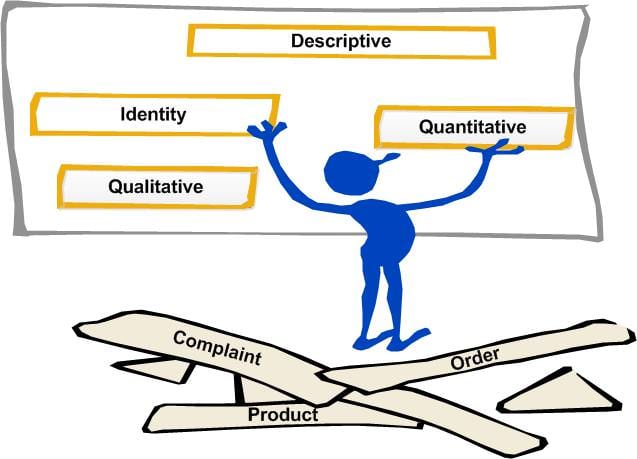
The following list provides examples of data elements and will help you quickly identify the critical pieces of information to your business and goals from the various different data sources. Typically the priority order of the data is as follows:

1. Customer Identity Data

At the heart of database marketing is the individual, so knowing who the individual is and being able to build and maintain a Single Customer View provides the first type of data, Identity. This includes any information which enables an individual to be uniquely identified and includes:

  • Name Information – Title, First Name (Forename), Last Name (Surname), Designatory letters, etc.
  • Person Information – Date of Birth, Gender, etc.
  • Postal Address Information – Building Number, Building Name, Address Lines, Town, County, Postal/Zip Code, Country, etc.
  • Telephone Information – Home Telephone No., Work Telephone No., Mobile No., etc.
  • Email Address Information – Personal Email Address, Work Email Address, etc.
  • Social Network Information – Facebook Identifier, Twitter Address, Linkedin identifier, etc.
  • Account Information – Details of your customer’s account ids or user ids.
  • Job Information – Company Name, Department Name, Job Title, etc.
  • Permission and Suppression Data – Not distinctly an identity element of data, but equally important is the information concerning permission to communicate and reason for not communicating (suppressions).

2. Quantitative Data

Once you understand who the individual is the next key element is the measurable operational data, which enables you to understand how your customer has behaved, transacted or reacted with your business. This includes any information which describes activity completed between the customer and your business:

  • Transactional Information (Online and Offline) – Number of products purchased, actual products purchased, Order/Subscription Value, Order/Renewal dates, product abandonments (abandoned baskets), Product Returns, etc.
  • Communication Information (inbound and outbound) – Communication date, communication channel, Opens, Click throughs, etc)
  • Online Activity – Website visits, product views, online registrations, etc.
  • Social Network Activity – Facebook likes, Twitter interactions, etc.
  • Customer Services Information – Complaint details, customer query details, etc

3. Descriptive Data

Understanding who the individual is and the type of activities they complete with you provides a good starting point for any marketing database. To gain a fuller perspective of your customer additional profile information is crucial. This provides additional information about your customer, beyond the identity and quantitative details, covering:

  • Family Details – Marital status, number of children, age of children, etc.
  • Lifestyle Details – Property type, car type, number of car doors, pet ownership, etc.
  • Career Details – Profession, Education level, etc.

4. Qualitative Customer Data

The final type of data you will come across provides further description of your customer and potential behaviour and is usually provided by questionnaire type information where an attitude, motivation and opinion is provided:

  • Attitudinal information – How do you rate our customer service, how do you rate the value of the product, how likely are you to purchase our product again, etc?
  • Opinion – What is your favourite colour, where is your favourite holiday destination, etc.
  • Motivational – Why was the product purchased (personal use, gift for someone, etc), what was the key reason for purchasing our product (locality, price, quality), etc.

Using this simple classification process and relating them to your core business goals, will enable a quick identification of which data provides the information critical to the core success of your business. This can then be used to plan the appropriate delivery phases, with clear understanding of the value achieved from each data item included, enabling you to answer the question ‘How valuable is knowing my customer’s pet name?’ to your business.

By Jim Roberts  - https://tinyurl.com/2s4xf8em


Unlocking Marketing Potential: Understanding the Power of Customer Data Platforms (CDPs)

Joshua A. Joseph

Staying ahead of the curve is paramount to success in the dynamic realm of modern marketing. One powerful tool that has emerged as a game-changer for startup marketers is the Customer Data Platform (CDP). This article aims to provide you, my sweet fellow marketers, with a comprehensive understanding of what a CDP is and how it can revolutionize your marketing strategies.

What is a Customer Data Platform (CDP)?

To grasp the concept of a Customer Data Platform, let's break it down into its fundamental components:

Customer: In marketing, the customer is your North Star. Understanding their behaviors, preferences, and needs is the cornerstone of effective marketing.

Data: Data is the currency of the modern digital age. It's the raw material that fuels marketing campaigns. This data can include everything from demographics and purchase history to website interactions and social media engagement. But we often run into problems with data compliance with GDPR and PII

Platform: The term 'platform' denotes a unified system where all this valuable customer data is collected, organized, and made readily accessible for analysis and action.

A Customer Data Platform, in its essence, is a specialized software that empowers marketers to collect, organize, and leverage customer data from multiple sources in a unified and user-friendly interface. This technology acts as a nexus for all customer-related information, providing a holistic view of each customer's journey.

Why Do Marketers Need CDPs?

To answer this question, let's dive into some of the core challenges marketers face daily:

  1. Data Silos: In the age of digital marketing, data is spread across various channels, such as email marketing, social media, web analytics, and CRM systems. These data silos make it challenging to gain a 360-degree view of the customer.
  2. Personalization: Modern consumers expect personalized experiences. Marketers need a tool to gather and use customer data to craft tailored messages, offers, and content.
  3. Real-time Insights: Staying relevant in the digital landscape requires the ability to access and utilize real-time data. This can be a challenging task when dealing with disparate data sources.
  4. Compliance: Privacy and data protection laws are evolving rapidly. Marketers need to ensure they are adhering to these regulations, which can be a complex and daunting task.
  5. Data Security: As stewards of valuable customer data, marketers need to ensure the highest standards of data security and protection.

A Customer Data Platform is the solution to these challenges. It serves as a bridge between the scattered data points, enabling marketers to harness the full potential of their customer data.

How Does a CDP Work?

A CDP works by unifying data from various sources, transforming it into a structured format, and making it accessible for marketers. Let's break down the process step by step:

  1. Data Ingestion: The first step is collecting data from multiple sources, which can include CRM systems, website analytics, social media platforms, email marketing tools, and more.
  2. Data Unification: After data is collected, a CDP standardizes and organizes it. This is crucial for ensuring that all data is in a common format and can be effectively analyzed.
  3. Customer Profiling: The CDP creates detailed customer profiles, combining data from various sources to provide a holistic view of each customer. This includes demographic information, browsing behavior, purchase history, and more.
  4. Real-time Updates: A key advantage of CDPs is the ability to provide real-time insights. Marketers can access the latest data on customer interactions and behavior.
  5. Segmentation and Personalization: With unified data, marketers can segment their audience based on a wide range of criteria. This segmentation enables the creation of highly personalized marketing campaigns.
  6. Cross-Channel Integration: CDPs often offer the ability to integrate with various marketing channels, ensuring consistent messaging and customer experiences across platforms.
  7. Reporting and Analysis: CDPs provide robust reporting and analytics tools, allowing marketers to gain valuable insights from the data.
  8. Compliance and Security: To meet regulatory standards, CDPs often include features for data protection and compliance monitoring.

Real-world Applications of CDPs

Now that we have a grasp of how CDPs work let's explore how they can be applied in real-world marketing scenarios.

1. Personalized Email Marketing:

Imagine you run an e-commerce store, and you want to send out personalized product recommendations to your customers. A CDP can help by analyzing purchase history, browsing behavior, and demographic data to craft tailored emails. This not only increases engagement but also drives sales.

2. Dynamic Website Content:

For an online news publication, CDPs can be used to personalize the content users see when they visit the website. By analyzing a user's past reading habits and interests, the platform can display articles that are most relevant to them.

3. Customer Journey Mapping:

Marketers can use CDPs to gain insights into the customer journey. By tracking touchpoints and interactions, they can identify areas where customers drop off or become disengaged. This data can then be used to optimize the customer experience.

4. Cross-Channel Campaigns:

A CDP allows marketers to seamlessly integrate their data across multiple channels. For example, if a customer receives a special offer via email, the same offer can be displayed on their social media feed or when they visit the website, providing a consistent brand experience.

5. Compliance and Data Protection:

CDPs can play a crucial role in ensuring that customer data is handled in compliance with privacy regulations. They can monitor data usage, provide transparency to customers, and help in quickly responding to data breach incidents.

Benefits of Implementing a CDP

By now, you might be wondering about the concrete advantages of integrating a Customer Data Platform into your marketing strategy. Here's a list of benefits that could revolutionize your approach:

1. Improved Customer Understanding:

CDPs provide a comprehensive view of your customers, allowing you to understand their behavior, preferences, and needs more effectively.

2. Enhanced Personalization:

With a deep understanding of your customers, you can create highly personalized marketing campaigns that resonate with your audience.

3. Real-time Insights:

Access to real-time data ensures you can react swiftly to changing customer trends and behaviors.

4. Increased Efficiency:

CDPs streamline data management and reduce the time spent on data integration, freeing up resources for more strategic tasks.

5. Higher ROI:

The ability to target your audience more effectively and personalize your messaging leads to improved campaign performance and a higher return on investment.

6. Cross-Channel Consistency:

Consistent messaging across channels strengthens brand identity and fosters trust with your audience.

7. Compliance and Security:

CDPs help you stay in compliance with data protection regulations, minimizing the risk of costly data breaches.

Challenges and Considerations

While CDPs offer numerous benefits, they are not without their challenges:

1. Cost: Implementing a CDP can be a significant investment. Marketers must weigh the potential ROI against the initial cost.

2. Data Quality: Garbage in, garbage out. CDPs rely on accurate and high-quality data. Marketers must ensure that the data sources are reliable.

3. Integration: Integrating a CDP into your existing marketing technology stack can be complex. Ensure that the chosen CDP is compatible with your current tools.

4. Data Privacy: The handling of customer data raises ethical and legal concerns. Marketers must prioritize data protection and comply with relevant regulations.

Choosing the Right CDP

Selecting the right CDP for your business is a critical decision. Here are some key factors to consider:

1. Integration Capabilities: Ensure the CDP can seamlessly integrate with your existing marketing tools and platforms.

2. Scalability: Look for a CDP that can grow with your business. It should handle increasing volumes of data and evolving marketing needs.

3. Customization: The ability to tailor the CDP to your specific business requirements is crucial.

4. Data Security: Ensure the CDP prioritizes data security and compliance with privacy regulations.

5. Vendor Reputation: Research the vendor's reputation and customer reviews to gauge the quality of their service and support.

Conclusion

Customer Data Platforms are becoming essential for marketers who seek to stay competitive. These platforms are more than just a tool; they're a key to unlocking the true potential of customer data. By unifying, analyzing, and leveraging data effectively, marketers can offer personalized experiences, drive engagement, and boost their ROI.

As you contemplate the adoption of a CDP, remember that it's not just a technology decision; it's a strategic one. The right CDP can be the catalyst for your marketing success, but it requires careful consideration, integration, and ongoing management.

https://tinyurl.com/3rrwy9ve